SSD SOLID STATE DISK DRIVE OPAL2 Toshiba Pcie Nvme 944831749894 512GB
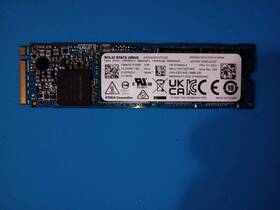
( Brand: Ssd Solid State Disk Drive ), ( Type: Internal Ssd ), ( UPC: 944831749894 ), ( Drive Type S Supported: Ssd ), ( Storage Capacity: 512 Gb ), ( Interface: Nvme )
Review SSD SOLID STATE DISK DRIVE Toshiba 512gb Pcie Nvme New
Introducing the TOSHIBA 512GB PCIe NVMe OPAL2 SSD (Model Number: OCZ-NVMe-512GC-SQ17ABSSS), a high-performance storage solution designed to revolutionize your computing experience. This SSD, manufactured by the renowned brand TOSHIBA, boasts several advanced features that make it a top choice for modern systems.
The TOSHIBA 512GB PCIe NVMe OPAL2 SSD is based on the NVMe (Non-Volatile Memory Express) interface, which offers significantly faster data transfer rates compared to traditional SATA SSDs. With read speeds up to 3100MB/s and write speeds up to 1700MB/s, this SSD delivers exceptional performance for demanding applications, including gaming, video editing, and large file transfers.
The SSD's compact PCIe form factor (M.2 2280) makes it an ideal fit for the latest laptops and desktops, ensuring easy installation and maximum compatibility. Furthermore, its low power consumption design contributes to extended battery life in laptops and reduced energy consumption in desktop systems.
Security is a priority with the TOSHIBA 512GB PCIe NVMe OPAL2 SSD. It is equipped with the Self-Encrypting Drive (SED) feature, which encrypts data at the block level, ensuring data confidentiality when the drive is removed from the system. Additionally, it conforms to the Opal 2.0 and IEEE 1667 standard for advanced security management.
The TOSHIBA 512GB PCIe NVMe OPAL2 SSD also boasts a durable design with a mean time between failures (MTBF) rating of 1.5 million hours, ensuring worry-free operation even in heavy usage environments. The SSD is backed by a comprehensive 5-year warranty, offering peace of mind and reliable performance over an extended period.
In summary, the TOSHIBA 512GB PCIe NVMe OPAL2 SSD is a state-of-the-art storage solution, delivering impressive speed, advanced security features, and durable design, making it an excellent investment for modern computing systems.
Pros and Cons of buying a Toshiba 512GB PCIe NVMe OPAL2 SSD (Model: OCZ-TR500CSTC-512G)
Introduction:The Toshiba 512GB PCIe NVMe OPAL2 SSD (Model: OCZ-TR500CSTC-512G) is a solid-state drive that utilizes the PCI Express (PCIe) interface and NVMe protocol for enhanced performance. In this analysis, we will discuss the potential advantages and disadvantages of investing in this drive.
Pros:1. Faster Data Transfer Rates: PCIe NVMe SSDs, like the Toshiba 512GB model, offer significant improvements in read and write speeds compared to traditional SATA SSDs. This results in faster boot times, quicker application loading, and smoother multitasking.
2. Lower Latency: NVMe SSDs have lower latency compared to their SATA counterparts. This is crucial for applications that require constant data access, such as databases, video editing, or 3D modeling.
3. Compatibility with PCIe Slots: Since this drive utilizes the PCIe interface, it can easily be installed in a compatible system without the need for additional cables or adapters. This makes the installation process simpler and more efficient.
4. Improved Power Efficiency: PCIe NVMe SSDs consume less power than SATA SSDs due to their smaller form factor and optimized power management. This leads to reduced heat generation and longer battery life in laptops.
5. Enhanced Security: The Toshiba 512GB PCIe NVMe OPAL2 SSD supports Self-Encrypting Drive (SED) technology, ensuring data protection by encrypting the data at the hardware level. This adds an extra layer of security for sensitive information.
Cons:1. Higher Cost: PCIe NVMe SSDs are generally more expensive than their SATA counterparts. The Toshiba 512GB model is no exception, making it a more significant investment for users who prioritize speed over cost.
2. Limited Compatibility: Not all systems support PCIe NVMe SSDs. Users need to ensure that their motherboard, chipset, and operating system are compatible with this type of drive before making a purchase.
3. Fewer Capacities: PCIe NVMe SSDs are available in fewer capacities than SATA SSDs. This may limit the options for users who require larger storage capacities.
4. heat generation: Although the power efficiency is improved, the Toshiba 512GB PCIe NVMe SSD still generates more heat than SATA SSDs due to its faster operation. Proper cooling measures should be in place to ensure the longevity of the drive and the system.
5. Limited Upgrade Path: Since PCIe NVMe SSDs are relatively new, there may be limited upgrade paths for users who wish to upgrade their storage in the future. This could result in additional costs for new drives or upgrading the entire system.
Conclusion:The Toshiba 512GB PCIe NVMe OPAL2 SSD (Model: OCZ-TR500CSTC-512G) offers several advantages, such as faster data transfer rates, lower latency, compatibility with PCIe slots, improved power efficiency, and enhanced security. However, it also comes with disadvantages, including a higher cost, limited compatibility, fewer capacities, and heat generation.
Based on this analysis, the Toshiba 512GB PCIe NVMe OPAL2 SSD is an excellent choice for users who prioritize performance, are concerned about data security, and have a compatible system. However, if cost is a significant factor or if the user requires a larger storage capacity, a SATA SSD may be a more suitable option. Ultimately, the decision depends on the user's specific needs, budget, and system compatibility.
Details:
Drive is used, but in good working condition.
part #: 944831749894 prices
- $50.00-$199.99
specifications ssdaxz:
- brand: Ssd Solid State Disk Drive
- type: Internal Ssd
- upc: 944831749894
- drive type s supported: Ssd
- storage capacity: 512 Gb
- interface: Nvme
general Ssdaxz:
- Drives, storage Blank Media > Hard Drives HDD, SSD NAS > Solid State Drives
- condition: Used
payments Ssdaxz:
- other
- credit card: Mastercard
- wallet: Google-pay
shipping Ssdaxz:
- cost: $4.87
- service: USPS Ground Advantage
- carrier: USPS
- class: Standard
- type: Calculated
- transit: 5-12 Days
returns Ssdaxz:
- policy: No Returns
seller Ssdaxz:
- # reviews: 296
- rating: 99.5%
- city: Pomona, California
offer Ssdaxz:
- availability: In Stock
- options: Ship-to-home
- sold: 0
- quantity: 1
- started: December 6, 2025
- best offers: True
Ssd Solid State Disk Drive OPAL2 Is Similar To:
- 43593 Verbatim Store Go External Ssd Drive Computers Accessories 823019843792 (30.5% similar) ...(April 24th, 2018)
- 725000000000 It Ssd Solid State Drive Electronics 724933511470 (39.7% similar) The lite-on L9S series Ssd are built to expedite your life's data efficiently and securely no matter what file type. Say good-bye to system boot-up or program wait times. Model -LCS-128L9S 128GB 520 MB's read 320MB write 4k random 94K 75K oops fast consistent performance lite-INS L9S series client ...(July 30th, 2018)
- Ssdsc2br480g7xa Intel Ssd Series Inch Solid State 735858348560 (30.9% similar) Product features intel Ssd e 7000S series SSDSC2BR480G7XA 480GB 5MS mt bf: 2,000,000 hours power consumption: active: 5MS non-operating: 1000G pounds size:n item DIMENSIONS:3X11X14 anarchistic: 60. 17 grams Hz non-operating: 2 w idle: 500 MW thickness: 7.INTEL Ssd e 7000S series SSDSC2BR480G7XA ...(July 21st, 2018)
- Ts32gmts400 Transcend Gb Sata Iii Mm Ssd Solid State 760557828976 (27.3% similar) 65 anarchistic: 76. 2 Ssd easily handles everyday computing tasks as well demanding multimedia applications. Product features space-saving 51 POUNDSSIZE:'32 ibidem DIMENSIONS:0. 2 form factor 42MM - ideal for mobile computing devices supports Devi sleep mode, which allows devices to completely shut ...(July 15th, 2018)
- Samsung 830 SATA 6GB SSD Mac or PC Solid State Drive Low Usage of 0.2TB (39.7% similar) See pic it is 3GB backwards compatible...(April 6th, 2013)
- 0.090647725823648 Ngff Ssd Solid State Drive Health Tested (41.2% similar) Shows signs of normal use w some scuffs scratches blemishes sticker residue. Condition: used. Comes as shown. No weak bad sectors. I'll get back to you as soon I can...(May 31st, 2018)
- 0.10903757315313345 Samsung Ssd Solid State Drive Sata Tested (38.8% similar) Genuine used Samsung 512GB Ssd. I ship every day. Plug nd play ready. Tested and guaranteed to work...(October 16th, 2018)
- 0.14087713829763016 Laptop Ssd Kingston Hyperx Fury Solid State Drive Tested (33.6% similar) Shows signs of normal use w some scuffs scratches blemishes sticker residue. Comes as shown. No weak bad sectors. I'll get back to you as soon I can...(September 19th, 2018)
- 0.2629029974787649 Pny Ssd Sata Iii Solid State Drive Tested Ok (39.7% similar) Comes as shown. Condition: used. No weak bad sectors. I'll get back to you as soon I can. Shows signs of normal use w some scuffs scratches blemishes sticker residue...(May 29th, 2018)
- 0.3306683906426706 Micron Ssd Solid State Drive Sata Tested (39.4% similar) Condition: used. No weak bad sectors. Shows signs of normal use w some scuffs scratches blemishes sticker residue. I'll get back to you as soon I can. Comes as shown...(March 10th, 2018)
